 Business License

UV Adhesive Curing in Automotive Assembly: A Structural Engineer's Guide to Bonds That Survive 15 Years on the Road
Why Automotive Adhesive Bonds Fail in Places Nobody Inspects
Automotive assembly has quietly become an adhesive industry. A modern vehicle carries between 15 and 40 meters of structural adhesive, plus several hundred small bonds holding sensors, displays, trim clips, camera modules, and lighting lenses in place. None of these bonds are visible on a finished vehicle. All of them are load-bearing. When one fails, the symptom shows up months later as a rattling door card, a fogged camera lens, a delaminated display, or a water leak into the cabin — problems that are expensive to diagnose and nearly impossible to trace back to the curing station that caused them.
This is the core difficulty of automotive adhesive curing: the failure happens far away from the process that created it, and long after the part left the plant. A bond that was under-cured on Tuesday may pass every inspection on Wednesday and fail on a customer's vehicle eighteen months later, at which point the warranty cost dwarfs whatever was saved by running the line fast.
This article is written for the engineers and quality managers who own those curing stations: process engineers at Tier-1 suppliers, adhesive specialists at OEM assembly plants, and quality leads responsible for warranty performance. It covers the adhesive chemistries used in automotive assembly, the specific curing physics that differ from printing and coating, the bond designs that fail in predictable ways, the measurement and validation routines that automotive quality systems demand, and what a properly specified UV LED curing lamp contributes to a line that cannot afford field failures.
The Adhesive Chemistries in a Modern Vehicle
Automotive assembly uses four distinct families of UV-curable adhesives, and each behaves differently under the lamp.
Structural acrylic adhesives bond metal to metal, metal to composite, and composite to composite. They are used on body-in-white joints, battery pack frames, and chassis reinforcements. These adhesives are typically 0.2 to 1.0 mm thick, heavily filled for strength, and require high peak irradiance to drive photons through the filled layer. Structural acrylics reach full strength within minutes of cure, which is why they have replaced rivets and spot welds in many EV battery assemblies where heat from welding would damage cells.
Light-curing silicone and urethane adhesives bond trim, weatherstrip, and sealing components. These are formulated for flexibility, not strength, and they must survive decades of flexing without cracking. Silicone adhesives are often thick — 1 to 3 mm beads on weatherstrip — and they cure slowly, often requiring a secondary moisture cure for the deepest sections.
UV-curable laminating and optical adhesives bond displays, touch panels, camera lenses, and sensor windows. These are the most demanding applications in the vehicle because a bubble or a void in the optical bond shows up as a visible defect. Optical adhesives are clear, 0.05 to 0.3 mm thick, and require uniform irradiance across the entire bond area — a hotspot causes localized over-cure and stress, while a cold spot leaves haze.
Dual-cure adhesives combine UV initiation with a secondary mechanism — anaerobic cure for metal joints in shadow, moisture cure for thick beads, or thermal cure for parts that pass through a paint oven. Dual-cure adhesives are the automotive industry's answer to shadow zones: when the UV light cannot reach a section of the bond, the secondary mechanism finishes the job. But the UV portion must still deliver enough energy to initiate, which means the lamp must reach every accessible surface.
What Makes Automotive Adhesive Curing Different from Printing
Print shops and automotive assembly plants both cure with UV, but the engineering constraints are not the same. Four differences matter most.
First, the bond is structural, not decorative. A printed ink layer that under-cures produces a visible defect that gets caught at inspection. A structural adhesive that under-cures produces a joint that looks and feels fine but carries a fraction of its designed load. There is no visual test that catches this. The only protection is dose verification and destructive testing on samples.
Second, the bond is often hidden. A door card bond sits behind the trim. A camera module bond sits inside a sealed housing. A battery frame bond sits under a cover. The lamp must be designed into the assembly sequence so the light reaches the bond before the part is closed up. Retrofitting a curing station into an existing cell is one of the most common causes of under-cure in automotive assembly.
Third, the substrate mix is hostile to adhesion. Automotive assemblies combine aluminum, high-strength steel, CFRP, glass-filled nylon, polycarbonate, and low-surface-energy plastics in a single part. The adhesive must bond to all of them, and the curing process must not degrade any of them. Aluminum conducts heat and cools the bond surface quickly, while polycarbonate is heat-sensitive and warps above 130°C. The lamp has to deliver enough energy for the adhesive without delivering enough heat to damage the weakest substrate. This is precisely where a cold-light UV LED curing lamp earns its place in an assembly cell: it can drive full cross-linking on a filled structural acrylic while keeping the polycarbonate cover beside it below its softening point.
Fourth, the quality system is unforgiving. Automotive production runs under IATF 16949, which requires documented process validation, traceability, and change control. A curing station is a controlled process, and any change — a new lamp, a new adhesive batch, a changed conveyor speed — requires revalidation. This is why automotive plants move slowly on equipment changes, and why the equipment they choose must be documented well enough to survive an audit.
Five Bond Designs That Fail in Predictable Ways
After reviewing adhesive failures across body assembly, battery packs, interior trim, and sensor modules, the same five failure patterns appear repeatedly.
Shadow-zone bonds behind structural features. The most common automotive adhesive failure. A bond line runs behind a flange, a bolt boss, or a stiffening rib, and the lamp illuminates the joint from one direction only. The adhesive cures on the illuminated side and remains uncured on the shadow side. The joint passes a pull test on a sample cut from the illuminated side and fails in the field where the load actually concentrates. The fix is structural: design the bond so it is accessible from at least two angles, specify a dual-cure adhesive with a secondary mechanism, or route fiber-optic light guides into the shadow zone.
Thick bead skin cure on weatherstrip and sealing bonds. The surface of a 2 mm weatherstrip bead cures hard while the interior stays soft. The joint holds initially and then separates after thermal cycling, because the soft core allows movement that cracks the cured skin. The fix is either a higher peak irradiance to drive photons deeper, a longer wavelength for better penetration, or a redesign that splits the bead into two thinner passes.
Optical bond haze from irradiance non-uniformity. A display or camera bond cures with visible haze or mottling. The cause is irradiance variation across the bond area — a hotspot over-cures and stresses the adhesive, a cold edge under-cures and stays hazy. The fix is optical: a lamp with a homogenized beam that delivers uniform irradiance across the full bond area, verified with a contour measurement rather than a single-point reading.
Aluminum bond under-cure from heat sinking. The adhesive on an aluminum joint cures slower than expected because the metal conducts heat away from the bond surface and the operator compensates by raising power. The result is over-cure at the exposed edge and under-cure at the interface. The fix is to measure dose at the adhesive surface, not at the part surface, and to specify a lamp whose output is stable enough that the operator does not need to compensate manually.
Battery pack bond failure from thermal exposure. A structural bond in a battery pack survives assembly but fails after the pack experiences thermal cycling during vehicle operation. The cause is usually incomplete cross-linking at the interface, which thermal expansion exposes. EV battery bonds are held to stricter validation than body bonds because a failed bond can compromise cell retention and, in the worst case, safety. The fix is a validated cure window backed by accelerated aging data, not a process that was tuned by trial and error.
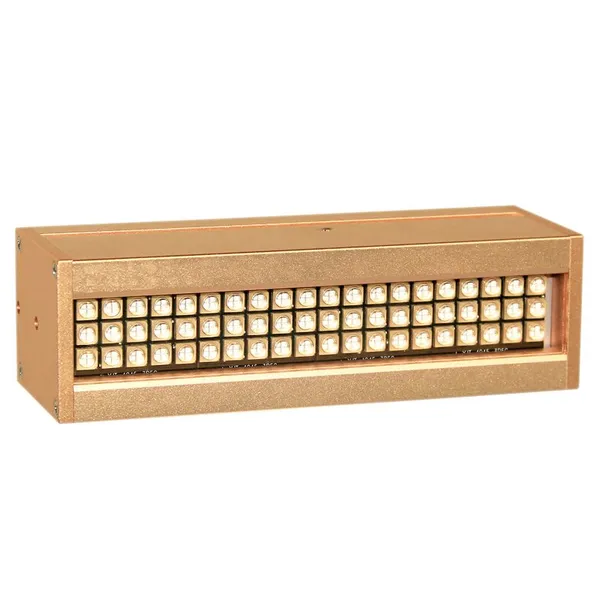
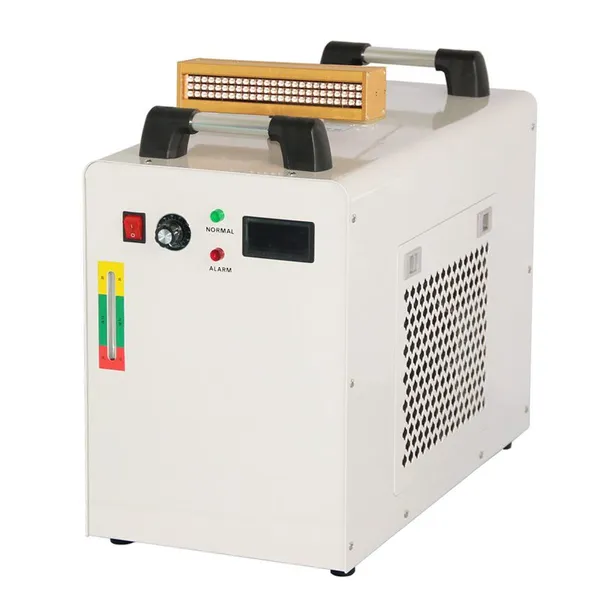
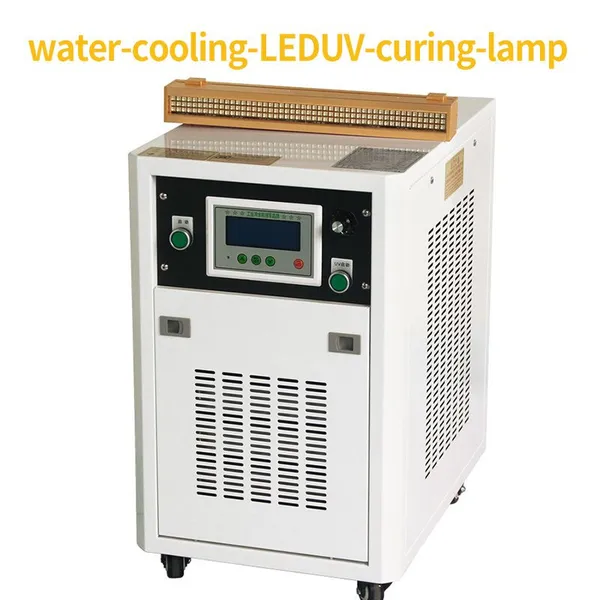
What a UV LED curing lamp Contributes to Automotive Assembly
Automotive plants specify curing equipment against criteria that general industrial lamps do not meet. Five capabilities matter.
Stable output across a three-shift schedule. LED arrays rated for 20,000 to 30,000 hours hold irradiance within a narrow band across the line's operating life. Mercury bulbs lose output sharply in the final third of their life, which means the process drifts and the quality team has to chase it. On a line that runs continuously, predictable output is the difference between a validated process and a process that requires constant attention.
High peak irradiance for filled and thick adhesives. Structural acrylics are heavily filled and 0.5 to 1 mm thick. They need 4 to 10 W/cm² at the bond surface to fully cross-link through the filled layer. A lamp with focused optics and a short working distance delivers that intensity without spreading energy over a wide area that the bond does not need.
Cold-light operation for mixed substrates. A single assembly can include polycarbonate that warps above 130°C and aluminum that heat-sinks aggressively. A UV LED curing lamp raises surface temperature by 5 to 12°C during a pass, which keeps polycarbonate stable and keeps aluminum bonds from over-curing at the edges. This is the single most important reason automotive plants have moved off mercury.
Wavelength configurability for different adhesive families. Structural acrylics, optical adhesives, and silicone sealants are formulated for different photoinitiator bands. A plant that runs multiple adhesive types needs either a wavelength-switchable system or dedicated lamps per adhesive family. Mixing a 365 nm lamp with an 395 nm adhesive produces under-cure that looks like a bad adhesive batch, and the resulting investigation wastes weeks.
Integration and traceability. Automotive curing stations must interlock with the line PLC, report irradiance and dose to the MES, and log a record per part. A lamp with a digital interface and onboard irradiance monitoring gives the quality team the data trail that IATF 16949 audits demand, without requiring a separate measurement step that operators skip under production pressure.
Validation: The Part of the Job Nobody Enjoys
Automotive adhesive validation is where good intentions meet paperwork. Three validation layers are non-negotiable.
Process validation at launch. Every new bond design requires a documented cure window: a lower dose limit that produces acceptable strength, an upper limit that avoids embrittlement, and evidence that the production lamp can hold the process inside that window across the full shift. This is typically a design of experiments across dose, adhesive thickness, and substrate condition, followed by destructive testing of 30 or more samples per condition.
Accelerated aging. Samples are exposed to thermal cycling from -40°C to 120°C, humidity, UV exposure per SAE J1960, and chemical contact with fuel, oil, and cleaning agents. The bond must retain a specified percentage of its initial strength after the equivalent of 15 years of service. Bonds that pass initial strength but fail aging are the most expensive kind of failure, because they reach customers before anyone knows there is a problem.
Change control. Any change to the lamp, the adhesive batch, the conveyor speed, or the fixture requires revalidation against the original window. This is the layer that most plants underinvest in, and it is the layer that catches the slow drift — a lamp that has decayed 12 percent, an adhesive batch with slightly different viscosity, a fixture that has worn enough to change the working distance.
The Measurement Routine That Protects the Line
Validation proves the process can work. Measurement proves it is working today. Four habits separate plants with stable bond quality from plants that fight fires.
Daily dose verification at the bond position. At shift start, a radiometer is placed at the actual bond location — not at the lamp aperture, not at a convenient flat spot — and the reading is logged. If drift exceeds the validated tolerance, production does not start until the UV LED curing lamp is adjusted or serviced. On multi-shift lines, this happens three times per day, and it is the single most effective defense against under-cure.
First-article destructive test. The first assembly of each run is cut apart and pulled to failure. The result is compared to the validated strength. This catches adhesive batch variation, surface preparation problems, and fixture misalignment before a batch is built.
In-process sample pull. Every few hours, a production part is pulled and tested. Results go on a control chart. Trend lines reveal gradual drift that spot checks miss — the lamp window slowly fogging, the dispense needle slowly wearing, the fixture slowly loosening.
Quarterly lamp audit and window cleaning. Irradiance is measured against the commissioning baseline, and the lamp window is cleaned. Adhesive mist, dust, and release agent residue accumulate on the window and absorb 15 to 25 percent of output. Cleaning the optics and re-measuring restores the process to baseline, and the measurement proves it.
The Economics of Getting Curing Right
Automotive adhesive failures are expensive in a way that printing defects are not. A delaminated door card costs a dealer visit and a warranty claim. A failed camera module bond costs a recalibration and possibly a replacement module. A battery pack bond failure can trigger a recall investigation. None of these costs appear on the production line's cost sheet, which is why curing stations are chronically under-resourced until a warranty campaign forces the issue.
Plants that have moved adhesive curing stations to LED report the same pattern: bond-related defect rates drop 50 to 70 percent within the first 90 days, mostly from eliminated thermal damage and stable output. On a line building 300 vehicles per shift with 20 bonds each, a 1 percent bond failure rate means 60 failed bonds per shift. Even at a modest $15 per rework, that is $900 per shift, or roughly $700,000 per year on a two-shift operation. A LED curing upgrade that removes half of that is a fast payback.
Energy savings average 50 to 60 percent, and maintenance drops to near zero because LED arrays do not need bulb changes. On automotive lines, uptime matters more than energy: a mercury lamp warm-up of 60 to 180 seconds per startup, multiplied across shift changes and job switches, adds up to 10 to 20 minutes of lost production per shift. LED reaches full power instantly, and that recovered time is the most tangible benefit on a line where every minute has a takt cost.
Starting a Pilot Without Breaking Validation
The lowest-risk path to LED conversion in automotive assembly is a pilot on one bond family, not one line. Choose a bond type with a high scrap rate or a history of field complaints — camera module bonds, battery frame bonds, or door card bonds are common starting points. Run the existing process for two weeks, logging dose, destructive test results, and scrap rate. Then install the LED system and run the same measurements for another two weeks.
Compare the data against the validated window. If the LED station holds strength inside the window, reduces scrap, and eliminates thermal damage to sensitive substrates, you have the evidence package for the next bond family. When the pilot proves out, the same UV LED curing lamp specification — working distance, peak irradiance, wavelength band — becomes the template for every cell that runs that adhesive, which shortens validation for the rollout considerably. Use the pilot to write the updated work instruction and the daily measurement routine, so the rollout does not depend on tribal knowledge.
Do not convert a whole plant at once. Automotive validation is slow by design, and a conversion without pilot data usually means weeks of revalidation while production waits. A bond-family pilot, followed by a measured rollout, is the path that successful Tier-1 suppliers have taken — and it keeps the quality system intact while the equipment changes underneath it.
Closing Thought: The Bond Is the Product
Automotive adhesive curing does not appear on a vehicle's specification sheet, but it determines whether the vehicle meets its specification at all. A rattle, a fogged lens, a leaking seal, or a battery pack that fails a safety test all trace back to a bond that was cured incorrectly, usually in a shadow zone nobody inspected, on a line running slightly faster than the validated window.
A properly specified UV LED curing lamp — stable output, high peak irradiance for filled adhesives, cold-light operation for mixed substrates, wavelength matched to the adhesive family, and integrated traceability — removes the variables that cause most of these failures. But the lamp does not validate the process, and it does not test the bonds. The design of experiments, the accelerated aging, the daily dose verification, the first-article pull test, and the quarterly lamp audit are what turn a piece of equipment into a bond that survives fifteen years on the road. Get those fundamentals right, and adhesive assembly stops being the hidden source of warranty cost and becomes the reliable structural method that modern vehicle design depends on.
Recently Posted
-
Finding the Real Process Window: How Top Printers Stop Guessing at UV Ink Curing
October 29, 2026Why "It Looks Dry" Is Not a Curing SpecificationWalk into any print shop and you will hear the same phrase: "the in Read More
-
UV Adhesive Curing Failures: A Process Engineer's Field Guide to Joint Strength, Shadow Zones, and Depth Cure
October 22, 2026Why UV Adhesive Projects Fail in Production — Not in the LabEvery process engineer who has specified a UV-curable adhesive has liv Read More
-
The Complete Buyer's Guide to LED UV Curing: What Every Production Manager Should Know Before Upgrading
October 15, 2026Why This Guide Matters Before You Spend a Dollar on Curing EquipmentIf you have ever stood on a production floor watching ink dry Read More
-
CT10 LED UV Curing Lamp: Redefining Precision Industrial Curing Standards
October 8, 2026Introduction to CT10 LED UV Curing Core PositioningIn modern precision industrial manufacturing, stable, low-temperature and high- Read More

Contact Us
Recommended Products
-
 CT UV LED Conveyor Curing Tunnel | Water Cooled UV Curing OvenNegotiableMOQ: 1 Combo
-
CT2 LED UV Curing Light, Industrial UV LED Dryer for Ink, Varnish & Glue CuringNegotiableMOQ: 1 Combo
-
Youjiete CT4 Industrial UV LED Curing System, UV Curing Lamp for Printing & Electronic Bonding,365nm/395nmNegotiableMOQ: 1 Combo
-
Youjiete CT5 UV LED Curing Equipment, Water Cooling UV LED Light Source for Industrial UV Adhesive and Printing Ink CuringNegotiableMOQ: 1 Combo
-
Youjiete CT10 LED Curing Machine, Industrial UV Light Source for UV Ink, Adhesive & Coating Fast CuringUS$ 5000 - 10000MOQ: 1 Combo
-
Youjiete Large‑Area UV LED Surface Light Source Curing Machine, 365nm 395nm Customizable for Industrial UV Glue, Ink & Coating CuringNegotiableMOQ: 1 Combo
-
Youjiete Industrial LED UV Curing Tunnel Furnace, Belt Conveyor UV Dryer for Offset Printing, 365nm 395nm CustomizableNegotiableMOQ: 1 Combo
-
Youjiete Desktop UV LED Curing Tunnel Furnace, Conveyor Type LED UV Curing Machine for UV Adhesive, Ink, Coating DryingNegotiableMOQ: 1 Combo
-
Youjiete Industrial Long Water‑Cooled LED UV Curing Lamp Head, UV Ink Curing LightNegotiableMOQ: 1 Combo
-
Youjiete LED UV Curing Lamp, Water‑Cooled UV LED Curing System For UV Ink, Varnish & Adhesive CuringNegotiableMOQ: 1 Combo
-
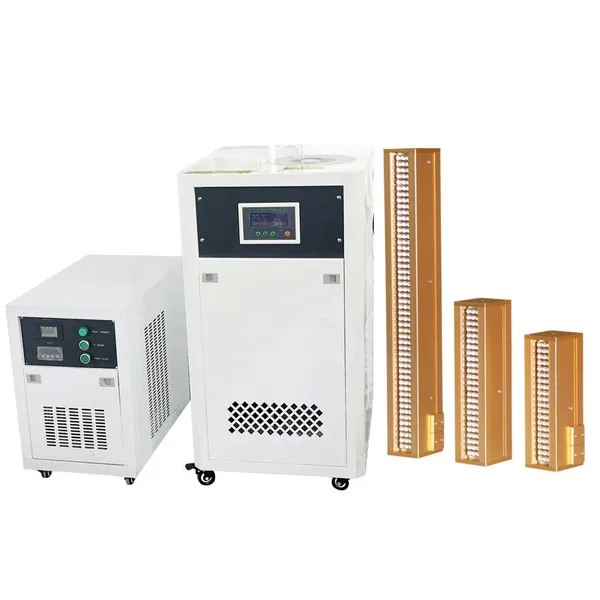
YJT‑CT4 Water‑cooled LED UV Curing Lamp 395nm Custom Size Industrial UV Ink Glue Curing LightUS$ 1520MOQ: 1 Combo
-
Power 1500w Led uv Curing LightNegotiableMOQ: 1 Combo
-
Green and Environmentally Friendly LED UV Curing MachinesUS$ 990 - 2000MOQ: 1 Combo
-
Advantages of Single Wavelength in LED UV Curing LampsUS$ 10000MOQ: 1 Combo
-
Is LED UV Harmful to Human Health?US$ 10000MOQ: 1 Combo
-
Advantages of Single Wavelength in LED UV Curing LampsUS$ 10000MOQ: 1 Combo
-
LED UV Curing LampUS$ 1980MOQ: 1 Combo
-
Green and Environmentally Friendly LED UV Curing MachinesUS$ 990 - 2000MOQ: 1 Combo
-
Green and Environmentally Friendly LED UV Curing MachinesUS$ 980MOQ: 1 Set
-
LED UV Curing LampUS$ 920 - 2000MOQ: 1 Set